Agent assist software is transforming how customer service, support, and sales teams operate every day. Rather than expecting agents to remember every policy, process, and product detail, these tools provide real-time guidance, suggestions, and automation during interactions. The result is faster, more accurate, and more satisfying experiences for both customers and agents, showcasing the latest AI call center innovations that are giving businesses a competitive edge.
Beyond just guiding agents, modern contact centers are exploring technologies that boost overall performance. Platforms like Flashmob Computing solutions offer collaborative AI tools that can help teams manage complex customer queries efficiently. Many organizations are also turning to high-performance computing systems to analyze large volumes of customer data, enabling smarter decision-making in real time.
Marketing and customer engagement strategies are evolving alongside these technologies. Agencies such as Marketing for Customers services provide insights that help businesses personalize experiences while integrating agent assist software. By adopting advanced marketing automation platforms, companies can track interactions, identify trends, and support agents with predictive guidance.
Financial and operational insights also play a crucial role. Resources like Top Financial Resources for small businesses highlight cost-saving techniques and efficiency strategies that pair well with AI-driven contact center solutions. Combining these resources with agent assist software ensures teams are not only faster and more accurate but also empowered with actionable insights that drive customer satisfaction.
Top 10 Agent Assist Software Platforms
When it comes to improving customer interactions and boosting agent productivity, choosing the right agent assist software can make all the difference. These platforms provide real-time guidance, AI-powered suggestions, and automation to help agents deliver faster, more accurate, and more satisfying service. Here’s a list of the top 10 solutions in the market today.
1. Bright Pattern
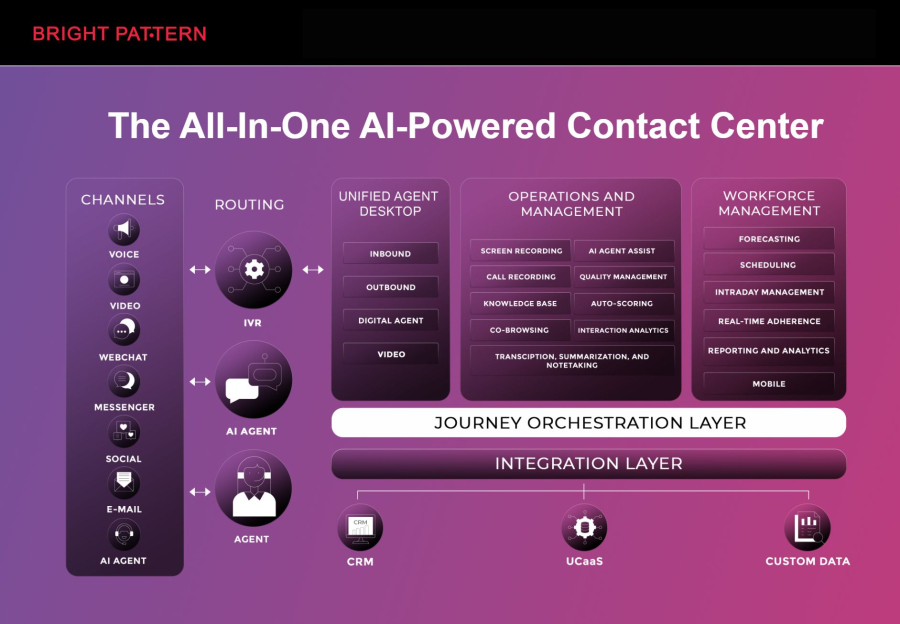
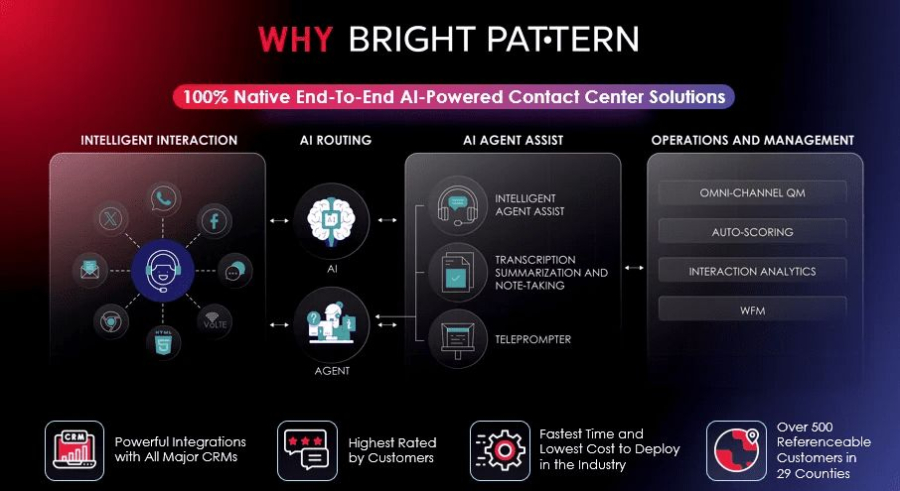
Bright Pattern leads the industry with its comprehensive agent assist software, designed to help contact centers streamline workflows and enhance customer experience. It integrates AI-driven guidance, omnichannel support, and advanced analytics to empower agents during every interaction.
Key features include:
- Real-time AI suggestions for agents
- Omnichannel support including voice, chat, email, and social
- Customizable automation workflows
- Analytics dashboards for agent performance and customer satisfaction
- Seamless integration with CRM and other business systems
Bright Pattern’s agent assist software helps businesses reduce call handling times, improve first-call resolution, and increase customer satisfaction, making it the preferred choice for enterprises of all sizes.
2. Genesys
A robust AI-driven platform providing agent assist tools with predictive routing and real-time recommendations.
3. NICE inContact
Offers cloud-based customer experience software with AI suggestions, analytics, and workflow automation for agents.
4. Talkdesk
Known for its AI-powered agent assistance and seamless integration with CRM platforms.
5. 8x8
Provides agent assist software with real-time guidance, reporting dashboards, and omnichannel support.
6. RingCentral
Features AI-powered agent tools for smarter call handling, workflow automation, and customer insights.
7. Five9
Offers intelligent agent assist solutions with real-time suggestions, predictive dialing, and analytics.
8. Zendesk
Provides AI-powered help desk solutions with automated recommendations and workflow guidance for support agents.
9. Salesforce Service Cloud
Integrates AI-driven agent assistance with CRM data to improve response accuracy and customer experience.
10. Freshdesk
Delivers AI-guided agent support, automated ticket handling, and knowledge management tools.
What Is Agent Assist Software?
Agent assist softwareis a category of tools that supports human agents during live customer interactions, such as calls, chats, emails, or video sessions. It typically uses automation and AI to surface the right information at the right time, recommend next best actions, and reduce manual work.
Rather than replacing human agents, agent assist software is designed toaugmenttheir capabilities. It works quietly in the background, listening for context, intent, and keywords, then offering helpful prompts, knowledge articles, or workflows.
How Agent Assist Differs from Traditional Contact Center Tools
- Traditional toolsfocus on routing, ticketing, and basic reporting.
- Agent assist softwarefocuses on what happensduringthe interaction: guidance, automation, and intelligent recommendations.
When implemented well, agent assist becomes a real-time coach sitting next to every agent, every minute of the day.
Why Agent Assist Software Matters Now
Modern customer interactions are more complex and more frequent than ever. Customers expect fast, personalized answers across many channels. Meanwhile, products, policies, and integrations grow more complicated over time.
These pressures create several challenges:
- Agents must learn and retain a huge amount of information.
- New hires take longer to become fully productive.
- Inconsistent answers erode customer trust.
- Manual after-call work slows down response times.
Agent assist software addresses these challenges by providing:
- Instant knowledge accessinstead of searching multiple systems.
- Real-time coachinginstead of relying only on occasional training.
- Automated workflowsinstead of repetitive manual tasks.
Core Benefits of Agent Assist Software
The impact of agent assist software is felt across the entire operation: customers, agents, supervisors, and leadership.
1. Faster, More Accurate Customer Responses
Agent assist tools listen to the conversation or read the customer message, then quickly surface relevant knowledge or prompts. This leads to:
- Reduced handle timebecause agents spend less time searching for answers.
- Higher first contact resolutionbecause agents have more complete information at their fingertips.
- Fewer transfers and escalationsbecause frontline agents are more confident and informed.
2. Improved Customer Experience and Satisfaction
Customers notice when agents are empowered. Agent assist software helps your team deliver:
- Consistent, accurate answersacross channels and agents.
- More personalized interactionsthanks to quick access to customer history and context.
- Shorter wait timesand smoother resolutions.
All of this contributes to stronger customer satisfaction and loyalty.
3. Happier, More Confident Agents
Agent assist software is also a powerful agent experience tool. It reduces stress and helps agents feel supported by:
- Providingreal-time coachinginstead of leaving agents to struggle silently.
- Guiding agents throughcomplex processeswith step-by-step workflows.
- Reducingcognitive loadso they can focus on the human aspect of the conversation.
Agents who feel more confident and less overwhelmed are more likely to stay, which directly supports lower turnover and stronger team performance.
4. Faster Onboarding and Upskilling
New agents often need months to become fully effective. Agent assist software can shorten that ramp-up significantly by:
- Serving as alive knowledge companionduring calls and chats.
- Highlighting key policies, scripts, and compliance wording when needed.
- Encouraging best practices with gentle, context-aware prompts.
This reduces the time and cost of training, without sacrificing quality.
5. Better Insights and Continuous Improvement
Because agent assist tools often collect and analyze conversation data, they can reveal patterns that are hard to see otherwise:
- Common customer pain points and questions.
- Policy or product areas that cause confusion.
- Training gaps where agents need more support.
Supervisors and leaders can use these insights to refine processes, update knowledge bases, and improve training programs.
Agent Assist in Practice: With vs. Without
| Scenario | Without Agent Assist | With Agent Assist |
| Customer asks a complex question | Agent searches multiple tools, puts customer on hold, or escalates. | Relevant article and steps appear automatically; agent responds quickly. |
| New agent handles first week of calls | Frequent pauses, uncertainty, high supervisor support needed. | Real-time prompts guide responses, building confidence from day one. |
| Compliance script needed | Agent tries to remember exact wording or looks it up mid-call. | Script appears automatically when trigger words or scenarios are detected. |
| After-call work | Agent types lengthy summaries and dispositions manually. | Automatic summaries and suggestions speed up wrap-up tasks. |
Key Features to Look for in Agent Assist Software
Different platforms offer different capabilities, but several core features define effective agent assist solutions.
1. Real-Time Conversation Intelligence
Real-time conversation intelligence uses technologies such as speech recognition and natural language processing to understand what is happening in the interaction.
Look for capabilities such as:
- Live transcriptionof voice calls into text.
- Intent detectionto identify why the customer is contacting you.
- Keyword and phrase spottingto trigger relevant suggestions or workflows.
2. Smart Knowledge Surfacing
Agent assist software should connect to your existing knowledge sources and bring the right content to the agent at the right moment.
- Automaticarticle suggestionsbased on conversation context.
- Snippet recommendationsagents can quickly insert into chats or emails.
- Easysearch within the agent desktopwhen they need to look up details manually.
3. Guided Workflows and Next Best Action
Beyond information, high-performing tools provide clear, guided steps to resolve an issue.
- Step-by-step flowsfor complex procedures, such as troubleshooting or verification.
- Next best action suggestionsthat adapt based on the customer's responses.
- Decision supportthat helps agents choose the right option, offer, or policy.
4. Automated Summaries and After-Call Work
Agent assist software can dramatically reduce after-call work by automatically summarizing the conversation and suggesting dispositions or follow-up actions.
- Call or chat summariesthat capture key points and outcomes.
- Suggested notes and tagsthat agents can review and confirm.
- Pre-filled formsto speed up any required documentation.
5. Quality, Compliance, and Coaching Support
Some solutions include capabilities that support quality assurance and compliance in real time:
- Compliance promptswhen mandatory disclosures or confirmations are needed.
- Real-time soft-skill coaching, such as reminders to show empathy or avoid certain phrases.
- Automatic call scoring suggestionssupervisors can review and refine.
6. Integrations with Your Existing Stack
For maximum benefit, agent assist software should work where your agents already spend their time.
- Contact center platformsfor voice and digital channels.
- CRM or ticketing systemsfor customer and case data.
- Knowledge management toolsfor content and documentation.
The smoother the integration, the easier it is for agents to adopt the new workflows.
Common Use Cases for Agent Assist Software
Agent assist is versatile and can support a wide variety of teams and industries. Some common use cases include:
Customer Service and Support Centers
- Answeringaccount and billing questionsfaster and more accurately.
- Guiding agents throughtechnical troubleshootingsteps.
- Ensuring properverification and authenticationprocesses.
Sales and Revenue Teams
- Prompting agents withpersonalized offersor upgrades during conversations.
- Suggestingobjection-handling techniquesbased on what the customer says.
- Capturingopportunity detailsaccurately in the CRM with minimal typing.
Technical Support and Help Desks
- Surfacingrelevant troubleshooting guidesfor specific error codes or issues.
- Recommendingdiagnostic stepsand logging results as the agent works.
- Helping agents navigatecomplex product configurationsor integrations.
Highly Regulated Industries
- Healthcare, finance, insurance, and utilities contact centers.
- Ensuringcompliance scriptsand disclosures are followed.
- Providingpolicy and regulation referencesin real time.
How Agent Assist Software Works at a High Level
While implementations vary, most agent assist platforms follow a similar flow:
- Capturethe interaction data (voice, chat, email, or screen activity).
- Understandthe content using technologies such as speech recognition and natural language processing.
- Matchthe detected intent, keywords, and context with relevant knowledge or workflows.
- Assistthe agent with suggested content, steps, or actions in their workspace.
- Record and learnfrom outcomes to improve future suggestions.
This continuous learning loop allows the system to become more helpful over time as it is exposed to more interactions and feedback.
Best Practices for a Successful Agent Assist Implementation
To unlock the full benefits of agent assist software, careful planning and change management are essential. Consider the following best practices:
1. Start with Clear Business Goals
Define what success looks like before you deploy. Common goals include:
- Reducing average handle time.
- Improving first contact resolution.
- Shortening new hire ramp-up time.
- Increasing customer satisfaction or quality scores.
Clear goals will guide configuration, training, and measurement.
2. Begin with a Focused Pilot
Instead of rolling out agent assist software to the entire operation at once, select:
- Aspecific queue or line of businesswith clear, measurable workflows.
- Engaged supervisorswho are excited to experiment and refine.
- Representative agentswho can provide constructive feedback.
A focused pilot allows you to test assumptions, tune suggestions, and prove value quickly.
3. Involve Agents Early and Often
Agent adoption is critical. To build trust and enthusiasm:
- Explain that the tool is designed tosupportthem, not to monitor them unfairly.
- Invite agents toreview and refine suggestionsduring the pilot.
- Highlight earlysuccess storieswhere the tool helped resolve difficult cases.
When agents feel heard, they are more likely to embrace new workflows.
4. Keep Knowledge and Workflows Up to Date
Agent assist is only as strong as the content it surfaces. Establish processes to:
- Regularlyreview and update knowledge articles.
- Retire or revise prompts that agents find unhelpful.
- Quickly add new workflows when products or policies change.
Continuous content improvement will keep the system relevant and valuable.
5. Train Supervisors as Champions
Supervisors play a key role in adoption. Equip them to:
- Understand how the tool works and where it adds value.
- Incorporate agent assist insights intocoaching sessions.
- Celebrate positive examples where agents used the tool effectively.
Supervisor champions help reinforce new habits on the front line.
6. Measure, Iterate, and Scale
Use data and feedback to refine the deployment before scaling it to more teams or locations.
- Comparebaseline metricsto post-deployment results.
- Gatherqualitative feedbackfrom agents and supervisors.
- Iterate on configurations, prompts, and integrations as you learn.
A thoughtful, data-informed approach ensures that expansion multiplies success instead of repeating early mistakes.
Key Metrics to Track with Agent Assist Software
To demonstrate value and guide optimization, track a balanced set of metrics across efficiency, quality, and experience.
Operational and Efficiency Metrics
- Average handle timefor calls and chats.
- After-call work timeper interaction.
- First contact resolutionrates.
- Transfer and escalation rates.
Quality and Compliance Metrics
- Quality assurance scoresfrom call or chat reviews.
- Script and disclosure adherencein regulated areas.
- Error ratesin documentation or case handling.
Customer Experience Metrics
- Customer satisfaction scoresafter interactions.
- Net sentimentor tone analysis, where available.
- Customer complaintsrelated to information accuracy or handling.
Agent Experience Metrics
- Agent satisfactionsurvey results.
- Turnover and retentiontrends.
- Time to proficiencyfor new hires.
Together, these metrics provide a clear picture of how agent assist software is helping the business, customers, and employees.
Future Trends in Agent Assist Software
Agent assist is evolving quickly, driven by advances in AI and automation. Several trends are shaping the future:
- More natural and context-aware suggestions, with improved understanding of nuance and intent.
- Tighter integration with self-service, so knowledge improves both agent and customer-facing channels.
- Proactive guidancethat anticipates customer needs and prepares agents before they are asked.
- Deeper analyticsthat connect conversation insights directly to product, marketing, and operations strategies.
Organizations that invest in agent assist software today are building a strong foundation for a more intelligent, efficient, and human-centered service operation tomorrow.
Bringing It All Together
Agent assist software is more than a new tool in the tech stack. It is a way to empower your agents with the real-time support they need to deliver outstanding customer experiences, day after day.
By combining intelligent guidance, smart knowledge surfacing, and practical automation, agent assist solutions help you:
- Serve customers faster and more accurately.
- Support and retain your agents with better tools and coaching.
- Uncover insights that drive continuous improvement.
With thoughtful planning, strong change management, and a commitment to ongoing refinement, agent assist software can become a powerful engine for productivity, satisfaction, and long-term customer loyalty.
